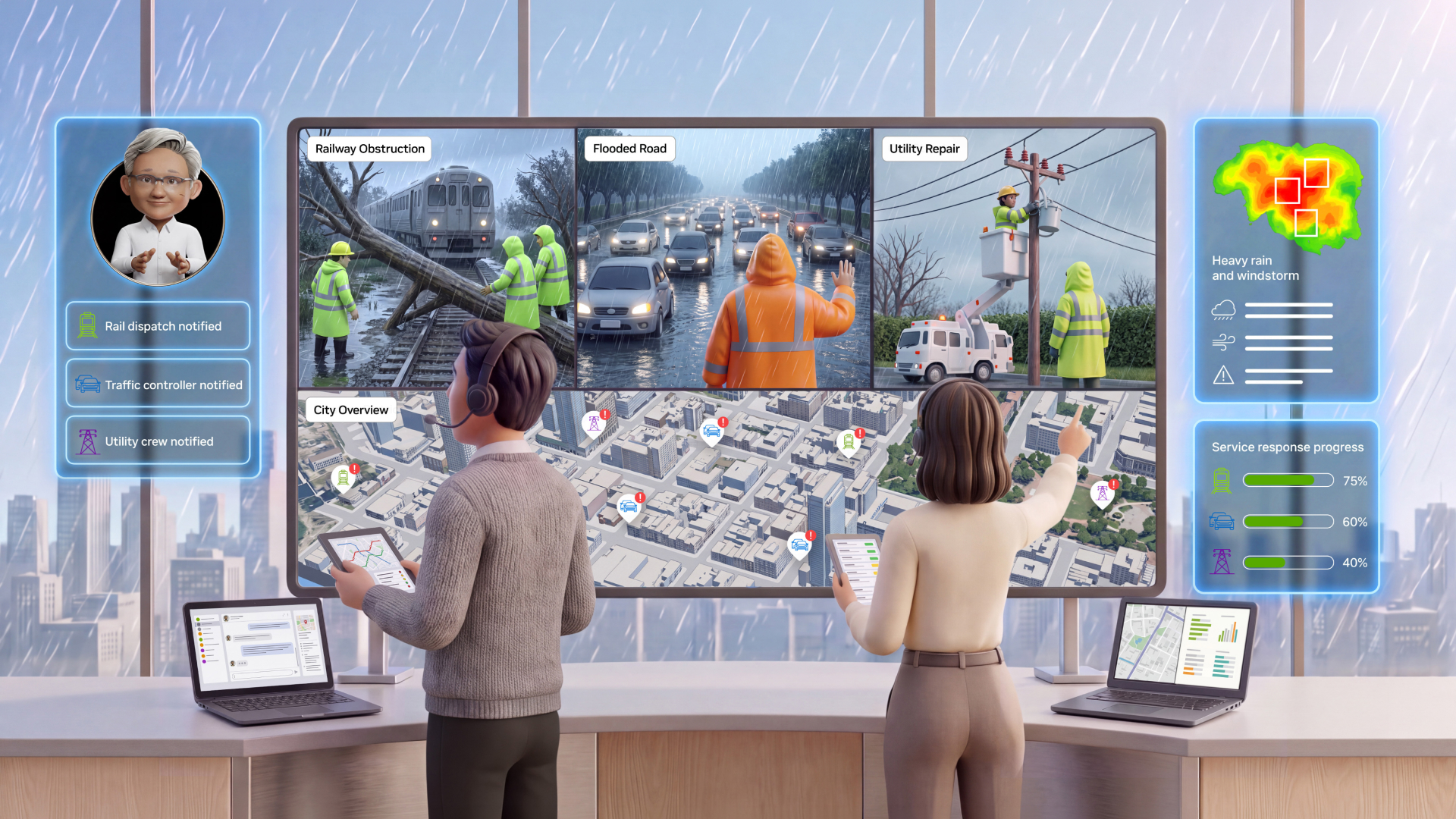
Cities globally are utilizing physical and agentic artificial intelligence to improve public services, infrastructure planning, and operational efficiency while maintaining data control. Organizations are leveraging shared computing infrastructure, such as workstations and GPU systems, to deploy these capabilities without requiring massive standalone investments.
In various regions, companies and institutions are applying these technologies to distinct municipal challenges. Spanish deployments use specialized resident-service agents for administrative tasks, while projects in the San Francisco Bay Area and Poland employ conversational and vision agents for public spaces and mobility insights. Additionally, digital twins and simulation tools are aiding infrastructure projects and industrial environments in Nigeria, Taiwan, and Morocco.
Ecosystem development is further supported through initiatives like Barcelona Supercomputing Center’s program for startups. These collective efforts showcase how localized computing foundations and modern AI models can transform urban management and public sector workflows.