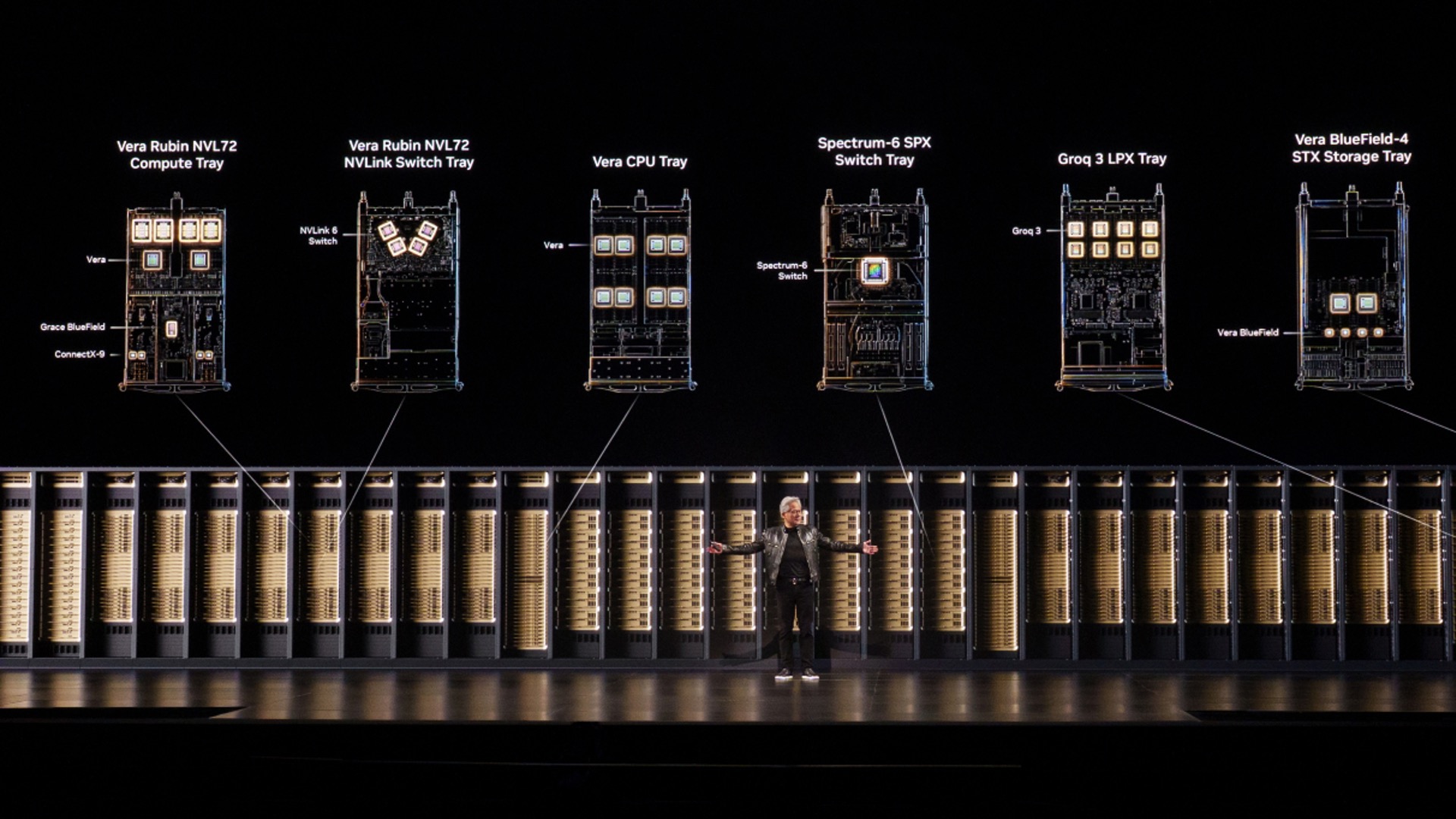
Growing model sizes, longer contexts, and agentic applications are significantly increasing GPU memory pressure while supply tightens and costs rise. To address this issue, NVIDIA highlights its full-stack codesign approach, which intentionally develops GPUs, CPUs, networking, storage, and software together to maximize memory efficiency across every layer of an AI factory.
The strategy tackles memory constraints by combining multiple techniques. These include shrinking model weights and distributing them across NVL72 domains using the NVFP4 format, compressing and offloading inactive KV cache context to lower-cost storage tiers like NVIDIA CMX context memory, and utilizing the NVIDIA Vera CPU. Together, these innovations help bypass the memory wall, reduce high-bandwidth memory pressure, and dramatically improve throughput per dollar for advanced workloads.